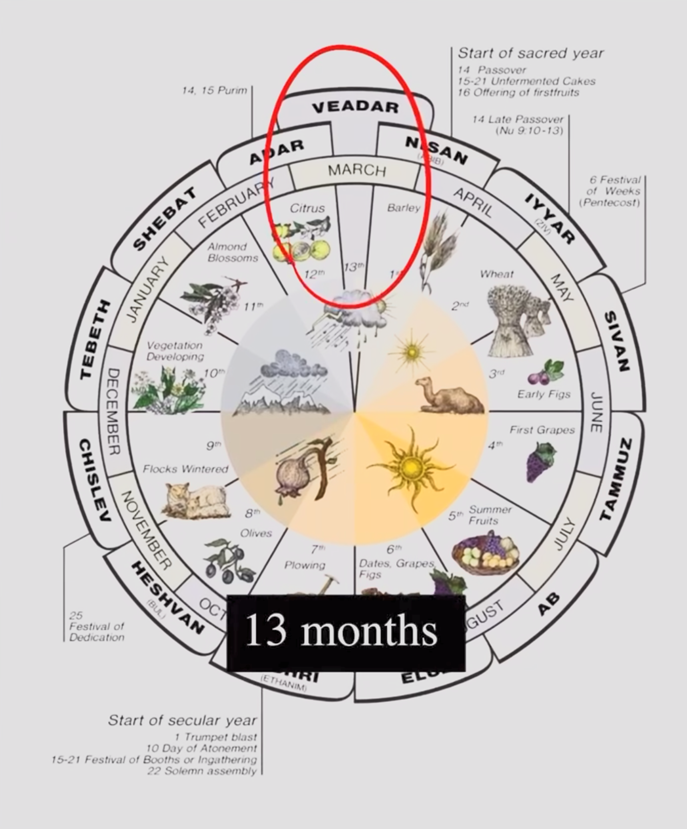
13 months simpler? More precise?
Characters
- Ava — advocate for the 13‑month, 28‑day calendar
- Marco — practical skeptic
- Rina — systems engineer
- Jules — philosopher who loves Occam’s razor
- Plato — metaphysician, lover of Forms
- LaRouche — political economist, champion of creativity and anti‑reductionismDialogue
Ava:
The 13‑month calendar just makes more sense. Thirteen months, each with 28 days, perfectly regular. And it aligns with the moon cycle better than our current mess.
Marco:
Except the moon cycle isn’t 28 days. It’s about 29.53. Your “alignment” drifts immediately.
Ava:
Still, it’s closer than what we have. And the symmetry is beautiful.
Rina:
Beautiful doesn’t mean functional. The world runs on the solar year. Agriculture, seasons, climate — all solar. A lunar‑based structure doesn’t help.
Ava:
But it’s simpler.
Jules (smiling):
And here we invoke Occam’s razor. The simplest system is usually the best. Thirteen identical months — that’s simplicity incarnate.
Marco:
Occam’s razor doesn’t mean “choose the prettiest spreadsheet.” It means “don’t add unnecessary assumptions.” Switching calendars adds massive assumptions.
**A voice echoes from the side of the room…**Plato enters.
Plato:
My friends, you speak of simplicity as though it were the measure of truth. But the world of appearances is simple only because it is shallow. The true order of time is not found in the shadows of convenience but in the intelligible harmony of the cosmos.
Ava (delighted):
Exactly! The 13‑month calendar feels more harmonious.
Plato:
Harmony is not achieved by forcing the heavens into a grid of your own design. The lunar cycle is not 28 days; the solar year is not divisible into equal months. The cosmos is not a perfect square. If you seek truth, you must ascend to the Forms — not impose artificial symmetry upon nature.
Marco (whispering to Rina):
So Plato is… against the 13‑month calendar?
Rina:
He’s against anything that pretends the world is simpler than it is.
Jules:
But Plato, isn’t the simpler explanation preferable?
Plato:
Only to those who mistake simplicity for wisdom. The Good is not simple. Justice is not simple. Why should time be?
**A sudden, energetic voice cuts in…**LaRouche enters.
LaRouche:
Plato is right about one thing: reductionism is the enemy of truth. But let’s be clear — the problem isn’t that the 13‑month calendar is too simple. The problem is that it ignores the creative nature of human progress.
Ava:
Creative? I thought this was about the moon.
LaRouche:
History advances through discontinuities — breakthroughs, discoveries, new principles. The current calendar is a product of such breakthroughs. You don’t replace a system that works with a numerically cute alternative unless it solves a real physical problem.
Marco:
Exactly. The Gregorian calendar fixed drift. The 13‑month calendar fixes… vibes.
LaRouche:
And worse — it pretends that human systems should mimic astronomical cycles. No! Human creativity transcends cycles. We shape the universe, not the other way around.
Jules:
But Occam’s razor—
LaRouche (interrupting):
Occam’s razor is a tool for lazy thinkers. Every scientific revolution — Kepler, Leibniz, Riemann, Einstein — added conceptual richness, not simplicity. The universe is anti‑entropic. Human creativity is anti‑entropic. Simplicity is not a virtue; it is a trap.
Plato (nodding):
On this, we agree. The soul does not ascend by shaving away complexity.
Ava (exasperated):
So both of you are saying my calendar is… too simple?
Plato:
It is simple in the wrong way.
LaRouche:
And simplistic in a dangerous way.
Rina:
And impractical in every way.
Marco:
But aesthetically pleasing, I’ll give you that.
Ava (sighing):
Fine. But you have to admit — 13 months of 28 days feels nicer.
Plato:
As do many illusions.
LaRouche:
And many bad economic models.